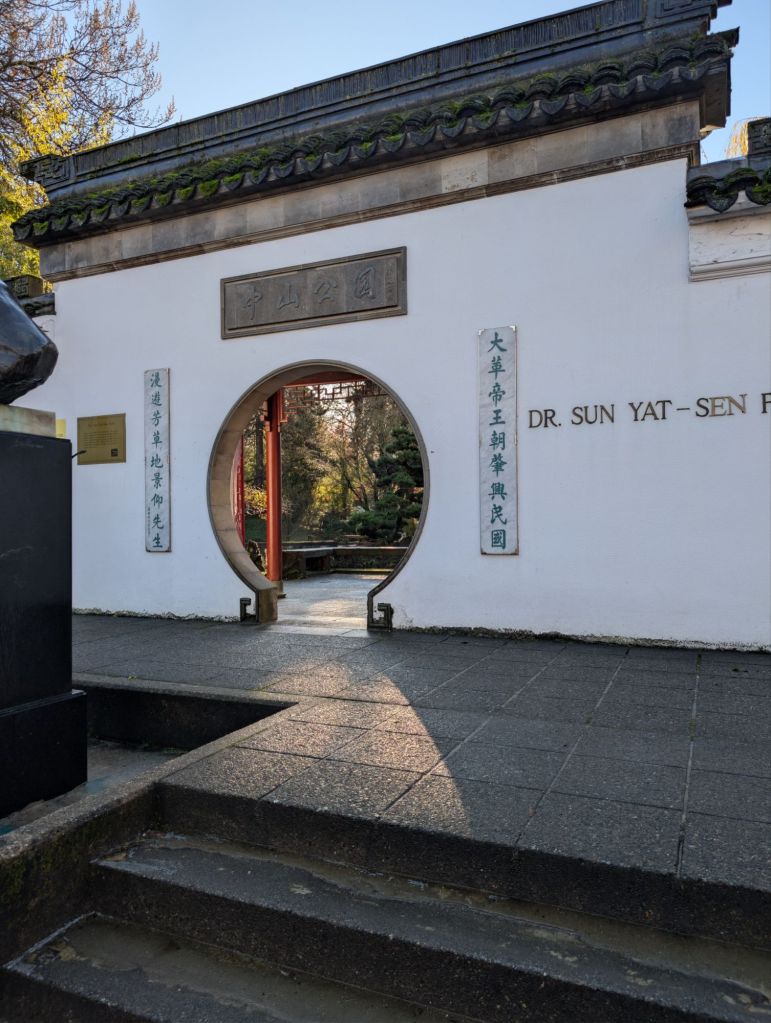
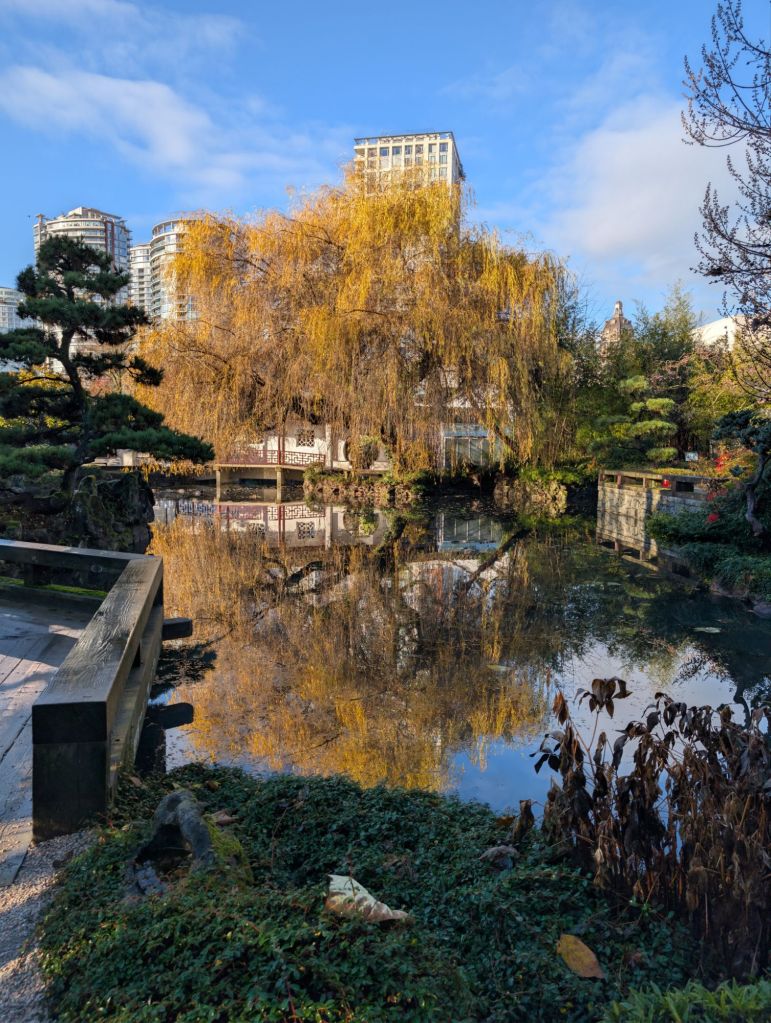
Between meetings in Vancouver, between conversations about trauma and comedy and recovery, I found myself needing quiet. The kind of quiet you can’t manufacture in a hotel room or a coffee shop. The kind that requires you to step through a threshold and leave the noise behind. I found it in the Dr. Sun Yat-Sen Public Park, tucked just beyond the streets of Vancouver’s Chinatown, behind unassuming white walls.
The entrance on Carrall Street is subtle. You pass through a moon gate, a simple opening in a white wall, and the city’s noise instantly softens. You haven’t entered the famous paid Classical Chinese Garden next door, but you’ve stepped into its public counterpart. A gift to the city. And completely free.
This felt significant to me, exploring how we create spaces for recovery and transformation. Here was a place designed around principles of balance and harmony. And it was open to everybody
The park uses local granite for its “Cloudy Mountain” rockery and BC timber for its pavilions. The design philosophy is profoundly Chinese, but the materials root it firmly in the Pacific Northwest. It’s integration, not imitation. Respecting tradition while adapting to local context
There’s something here that parallels the work I’m researching. Stand-up comedy as a recovery tool didn’t originate in veteran communities. But when adapted thoughtfully, when the structure respects both the art form and the specific needs of veterans it becomes something new. Something that works.
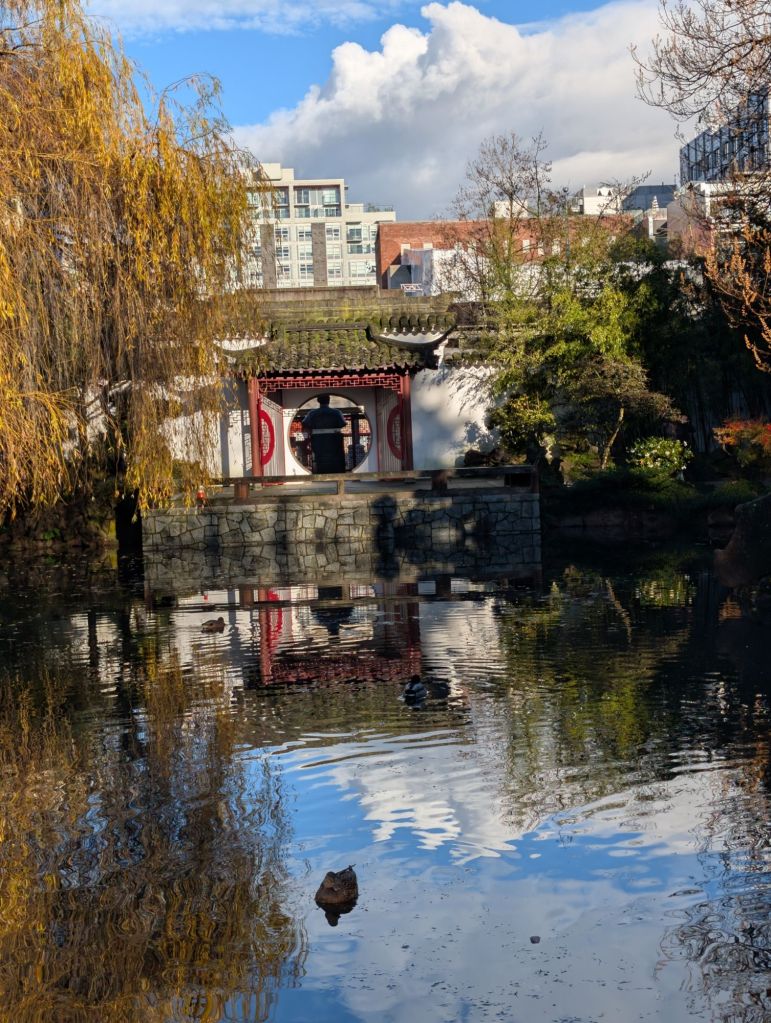
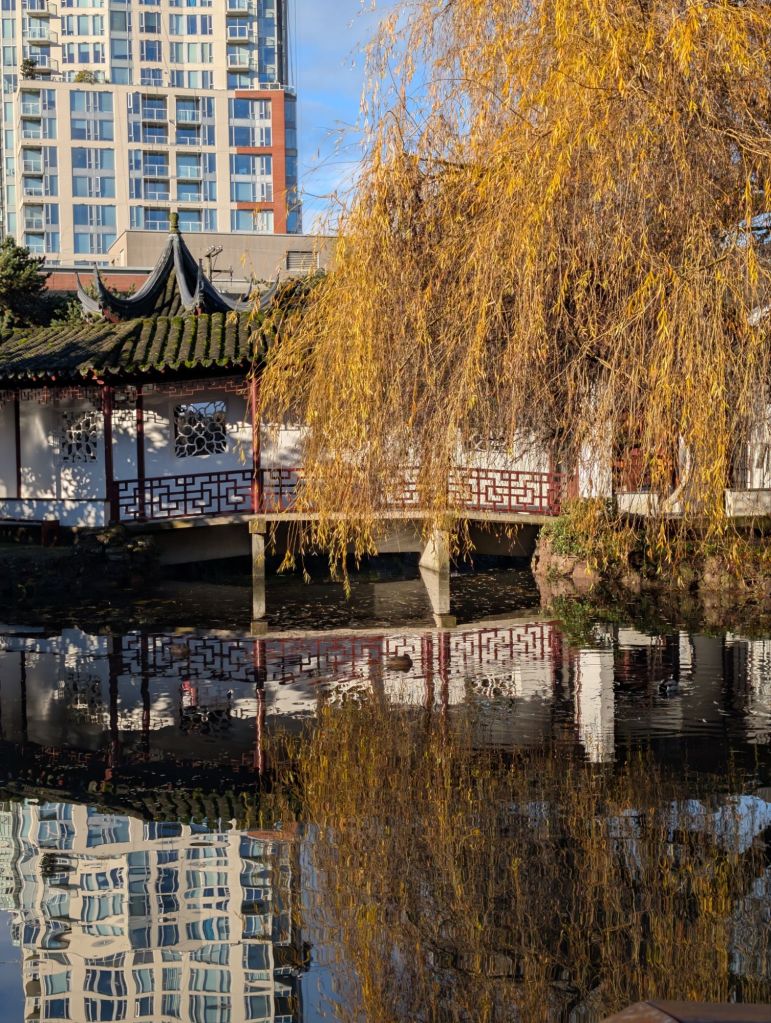
The main path leads you over the iconic zigzag “Jie Fang” bridge, a design meant to confuse evil spirits who, legend says, can only travel in straight lines.
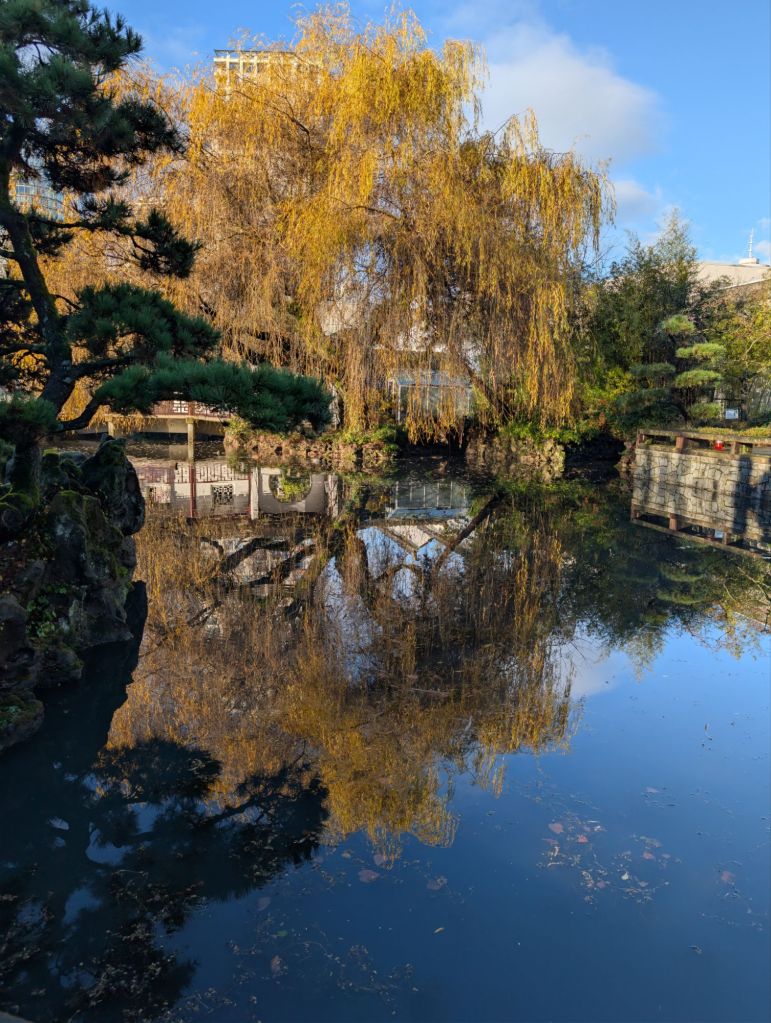
I stood on that bridge for a while, watching reflections of pavilions and willow trees doubling in the still water. The modern city looming behind, but here, a pocket of deliberate tranquility.

What brought this garden to life was its people. During my visit, I saw a grandparent practicing Tai Chi in a quiet corner, a student sketching, friends sharing conversation on a bench. It wasn’t silent, but the sounds were peaceful: the murmur of water, the rustle of leaves, respectful conversation.
This reminded me of something David Granirer said over dinner. His Stand Up for Mental Health courses work not just because of the comedy skills taught, but because of the community that forms. People keep retaking the course three, four, five times because the sense of belonging is so strong.
Recovery spaces, whether they’re parks or comedy workshops, need to be living, breathing, community spaces. Places you return to. Places where you see the same faces, build connections, feel held.
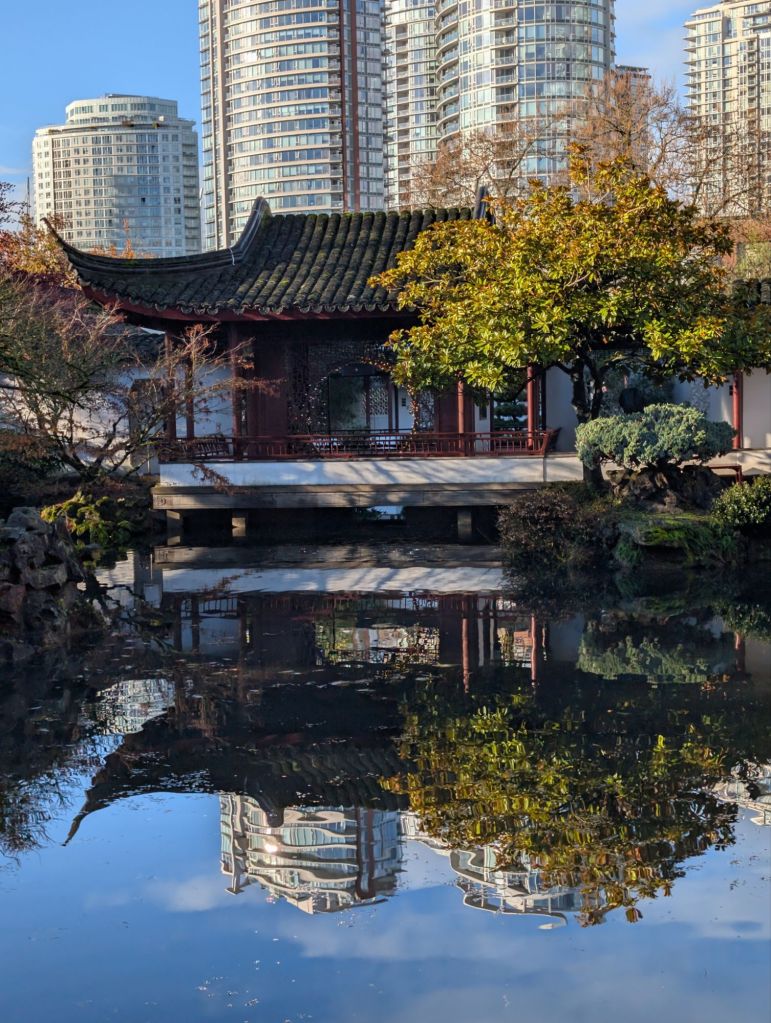
The plantings are a thoughtful mix: graceful bamboo whispers next to sturdy native firs, a literal representation of cultural fusion. What grows together, supports together.
Recovery work, like good garden design, isn’t about forcing perfection. It’s about creating the conditions where growth can happen naturally. It’s about understanding that the zigzag path isn’t a design flaw. It’s the design.
 Churchill Sent Me & A Bump in the road
Leave a comment