During my Churchill Fellowship research into comedy as a recovery tool for veterans, I kept encountering the same pattern. Participants would describe feeling more connected, more hopeful, more like themselves. They’d talk about finding meaning in their experiences and feeling empowered to control their own narratives.
I was documenting what was happening. But I didn’t have the framework to explain why it was working.
Then I discovered CHIME.
What is CHIME?
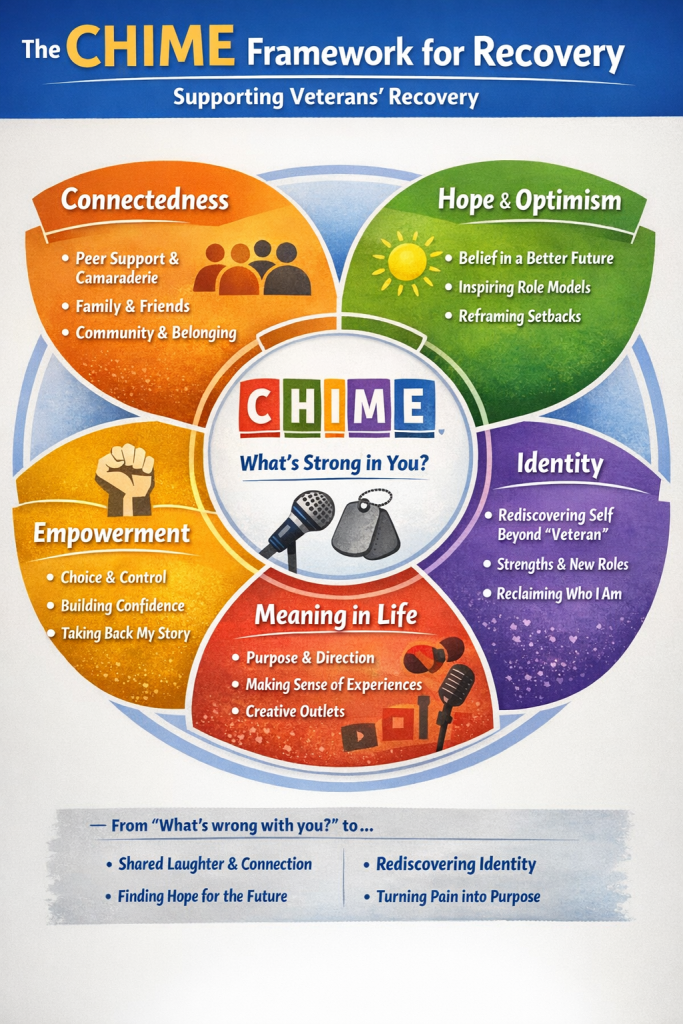
CHIME is an acronym that emerged from the largest systematic review ever conducted on personal recovery in mental health. Researchers at King’s College London analyzed 97 studies involving thousands of people recovering from mental illness across 13 countries.
They found five core processes that consistently appeared in recovery journeys:
**C** – Connectedness
**H** – Hope and optimism about the future
**I** – Identity
**M** – Meaning in life
**E** – Empowerment
These aren’t just nice ideas. They’re evidence-based recovery processes identified across cultures, diagnoses, and healthcare systems.
Why This Matters for Veterans
The CHIME framework was developed for mental health recovery broadly. But when I mapped what happens in comedy recovery programs against these five processes, the alignment was striking.
Every mechanism I’d been observing, David Granirer had been describing, participants had been experiencing, it all fit within CHIME.
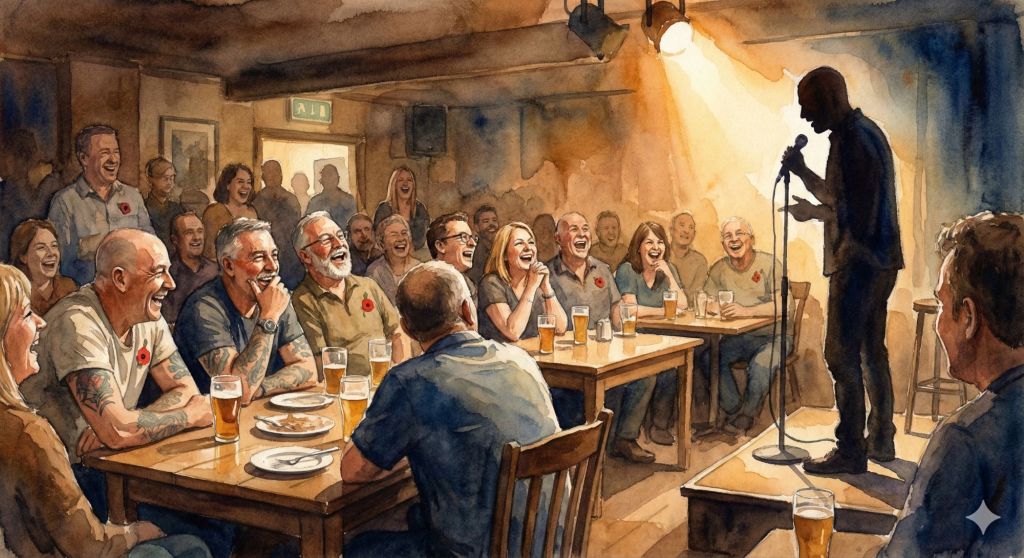
Connectedness: Comedy Creates Community
The research shows that 86% of recovery studies identified connectedness as crucial. This includes peer support, relationships, support from others, and being part of the community.
In Stand Up for Mental Health, participants keep retaking courses three, four, five times because the sense of belonging is so strong. David told me people come for the jokes and stay for the community.
At Legion Veterans Village, the cohort-based model creates organic peer support networks. Veterans identified these connections as one of the most valuable components of the program.
You can’t recover alone. Comedy creates the space where connection happens naturally, through shared laughter and shared

vulnerability.Hope: Getting the Last Laugh
Hope appeared in 79% of recovery studies. It includes belief in the possibility of recovery, motivation to change, and having dreams and aspirations.
“Getting the last laugh is really therapeutic,” David said. When you frame your story as comedy, you’re no longer just surviving your experiences. You’re reshaping them. That act of reshaping creates hope because it proves change is possible.
The comedian who’d been robbed 52 times at his 7-Eleven job, once with a bat, once with a knife, and 50 times by his boss paying him seven bucks an hour, isn’t denying his reality. But he’s demonstrating he has power over how that reality is told. That’s hope in action.
Identity: From Victim to Comic
Identity appeared in 75% of studies, including rebuilding a positive sense of self and overcoming stigma.
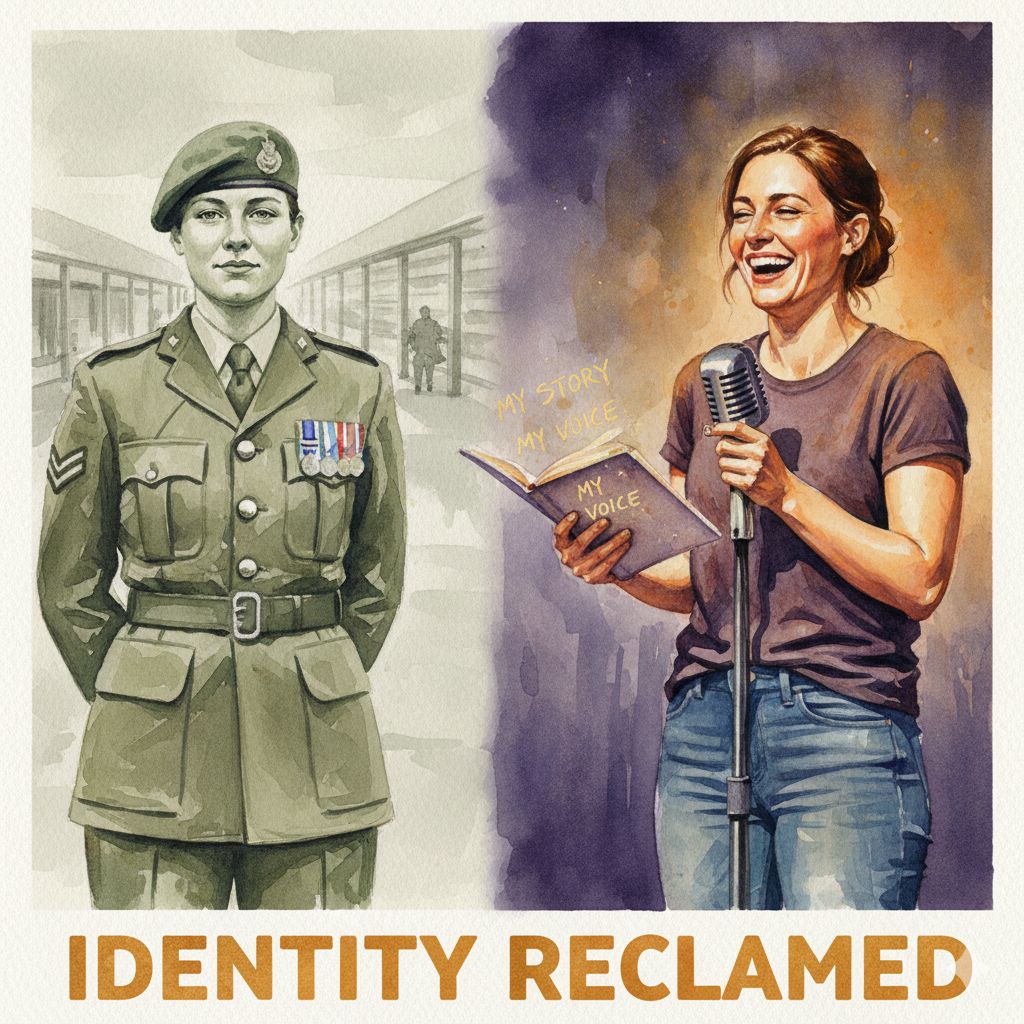
This is perhaps the most visible transformation in comedy recovery programs. People arrive as “clients,” “patients,” “veterans with PTSD,” “problems.” Over time, they start being talked about, and talking about themselves, as comics.
Their diagnosis or trauma doesn’t vanish. But their identity changes. They move from being “the story something happened to” toward being the person telling it.
For veterans specifically, this is powerful. Military identity is strong. Post-service identity can feel lost or reduced to “veteran with issues.” Comic becomes a new identity that incorporates experience without being defined by trauma.
Meaning: Turning Pain Into Purpose
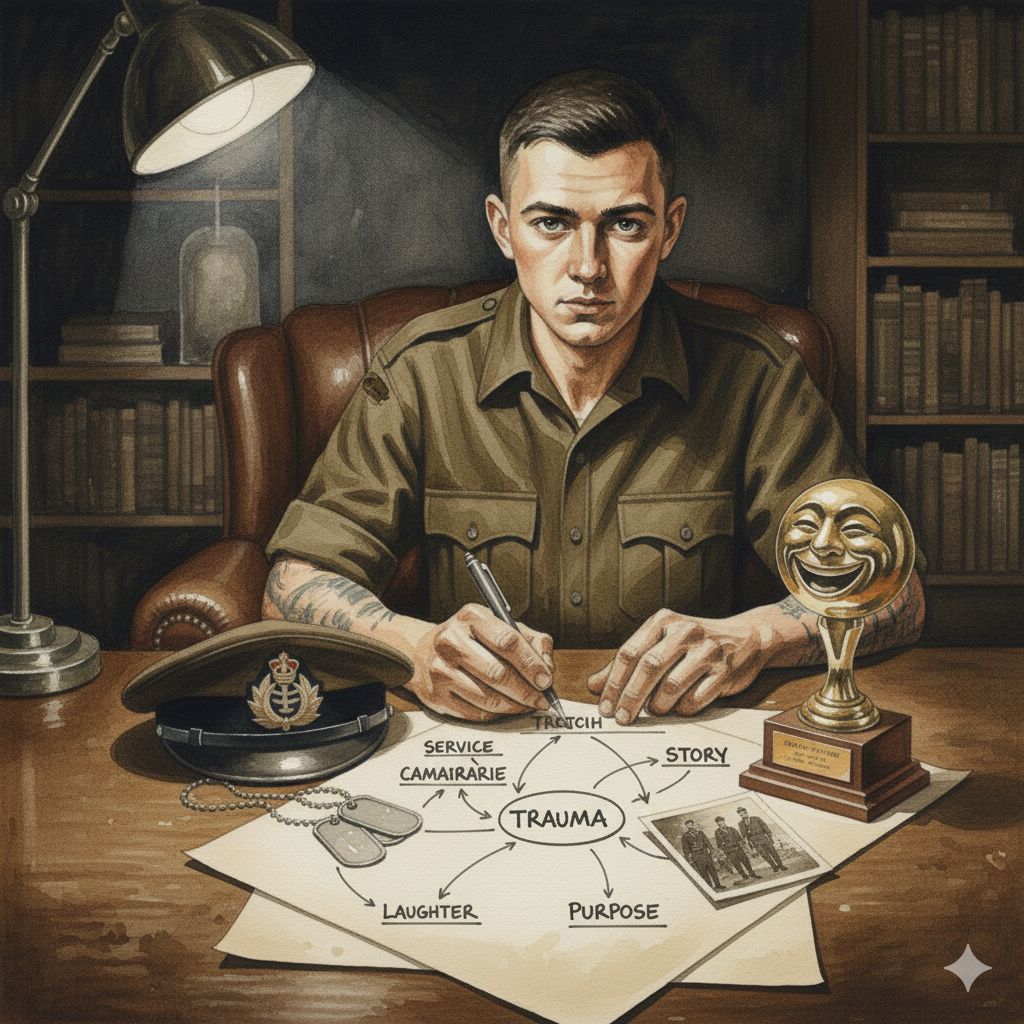
Meaning appeared in 66% of studies. It includes finding meaning in mental illness experiences, spirituality, quality of life, and meaningful roles and goals.
One Stand Up for Mental Health participant told David about her contingent self-esteem: “I learned very young that connection and acceptance have to be earned. So that’s really perfect for performing.”
She found meaning in the connection between her past wounds and her present purpose. The comedy became the bridge, transforming something that once caused pain into something that creates connection.
This is meaning-making in real time. Taking experiences that felt meaningless or overwhelming and crafting them into material that serves a purpose: making people laugh, creating connection, reducing stigma.
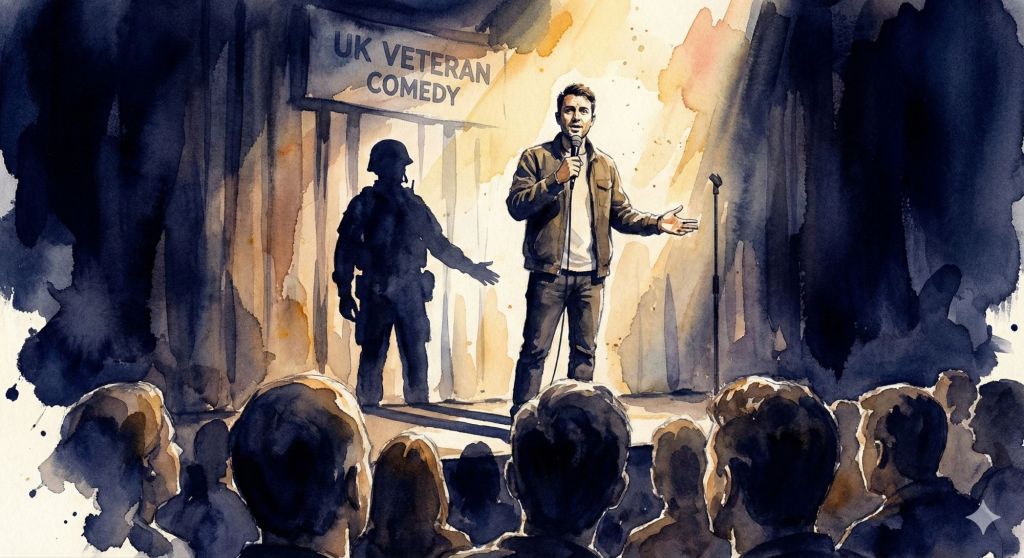
Empowerment: Authoring Your Own Story
Empowerment appeared in 91% of studies, the highest of all five processes. It includes personal responsibility, control over life, and focusing on strengths.
By writing their own jokes, participants control their narratives. They decide what to share, how to frame it, and when to deliver the punchline. For people whose mental health or trauma has made them feel powerless, this is revolutionary.
The participant who joked about forgetting to write their ADHD jokes because of their ADHD wasn’t just being funny. They were exercising agency over the very symptom that challenges them. They weren’t at the mercy of their condition. They were in dialogue with it, setting the terms.
Why CHIME Validates This Work
What struck me about discovering CHIME was that it provided an evidence base for what practitioners like David Granirer have known intuitively for decades.
Stand-up comedy for recovery isn’t just feel-good storytelling. It’s a structured intervention that systematically addresses all five evidence-based recovery processes.
When we teach veterans to write and perform comedy:
– We create **connectedness** through cohort-based learning and shared performance
– We build **hope** by demonstrating that painful experiences can be reshaped
– We support **identity** transformation from victim to artist
– We facilitate **meaning-making** by helping people find purpose in their experiences
– We enable **empowerment** through narrative control and skill-building
## The Research Gap
The CHIME framework also highlights what’s missing. The research identified that recovery studies are dominated by qualitative work and expert opinion. There’s a need for more rigorous evaluation of interventions that support these five processes.
This is exactly the challenge facing comedy recovery programs. We know it works. Participants tell us it changes their lives. But we lack the formal evidence that funders increasingly demand.
The CHIME framework gives us a roadmap. Instead of trying to prove comedy “works” in vague terms, we can measure its impact on these five specific, evidence-based processes.
## Looking Forward
My Churchill Fellowship is about understanding how stand-up comedy supports veteran recovery. The CHIME framework provides the theoretical foundation for that understanding.
Recovery isn’t about returning to who you were before. It’s about finding connection, maintaining hope, rebuilding identity, creating meaning, and exercising empowerment. It’s about living a satisfying, hopeful, and contributing life even with the limitations caused by illness or trauma.
Comedy doesn’t cure trauma. But it creates the conditions where all five CHIME processes can flourish.
That’s not just good comedy. That’s evidence-based recovery practice.
And now we have the framework to prove it.
—
**Reference:** Leamy, M., Bird, V., Le Boutillier, C., Williams, J., & Slade, M. (2011). Conceptual framework for personal recovery in mental health: systematic review and narrative synthesis. *The British Journal of Psychiatry*, 199(6), 445-452.
 Churchill Sent Me & A Bump in the road
Leave a comment